About this calculator
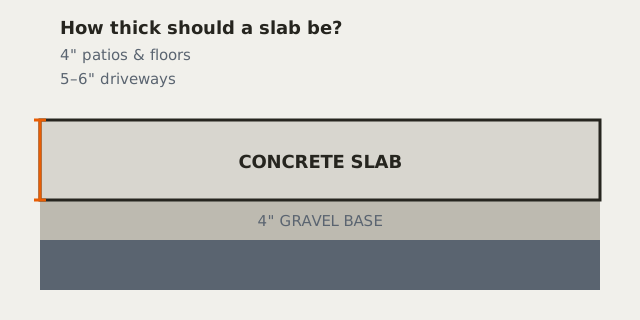
A driveway is just a large slab, but it carries vehicle loads, so it's poured thicker than a patio, usually 5 to 6 inches. Enter your driveway's length and width and the thickness you plan to pour, and you'll get the concrete volume in cubic yards, plus a rough material cost so you can sanity-check contractor quotes.
How the math works
Driveway volume is length × width × thickness, the same as any slab. Because driveways are large, you'll almost always order ready-mix by the cubic yard rather than mixing bags by hand. The cost figure multiplies your cubic yards by an editable price per yard so you can match your local ready-mix rate.
Common questions
How thick should a concrete driveway be?
5 inches is typical for cars; pour 6 inches if trucks, RVs, or heavy vehicles will use it. Skipping the extra inch to save concrete is a false economy. Cracking from an under-thick driveway costs far more than the extra yard.
How wide should a driveway be?
A single-car driveway runs 10–12 ft wide, a double 18–20 ft. Add length for any apron or parking pad and pour it as one calculation.
What does a concrete driveway cost?
Material (ready-mix) is usually the smaller share; labor, forming, grading, and finishing often double or triple the total. This calculator estimates material only. Use it to check that a quote's concrete line item is reasonable.