About this calculator
Footings are the buried concrete that spreads a structure's load into the ground. They're calculated as a long rectangular trench: width × depth × total length. Enter the cross-section (width and depth, in inches) and the total run in feet, and you'll get the volume to order, including a waste allowance for the over-dig that always happens in a trench.
How the math works
A footing is a rectangular prism. Width and depth are entered in inches and converted to feet, then multiplied by the total length in feet to get cubic feet, and divided by 27 for cubic yards. For a footing that turns corners, just add up the total centerline length of every run. The corners overlap a little, which your waste allowance covers.
Common questions
What size should a footing be?
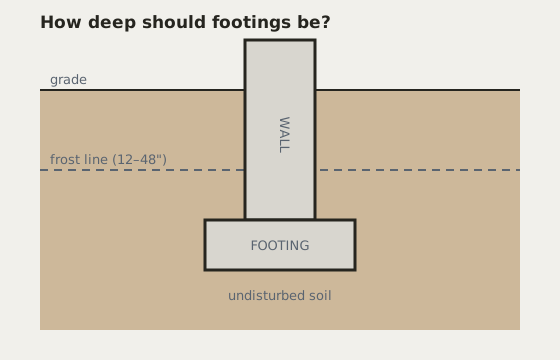
Footing dimensions are set by your local code and soil, usually based on the wall or post they carry. A common residential strip footing is 16–24 in wide and 8–12 in deep, but confirm with your plans or building department, not a calculator.
Should I measure centerline or outside length?
Use the centerline length of the trench. For a closed rectangle of footing, that's roughly the perimeter measured down the middle of the trench.
Footing over-dig
Trenches rarely come out to exact width, especially in soft or crumbly soil. Footings are one of the easiest places to come up short, so keep the waste allowance at 10% or higher unless your trench is formed.