Footings spread a structure's weight into the ground and anchor it against frost movement. Get the depth wrong and the whole structure can heave, settle, or crack. Two rules govern it: go below the frost line, and bear on solid soil.
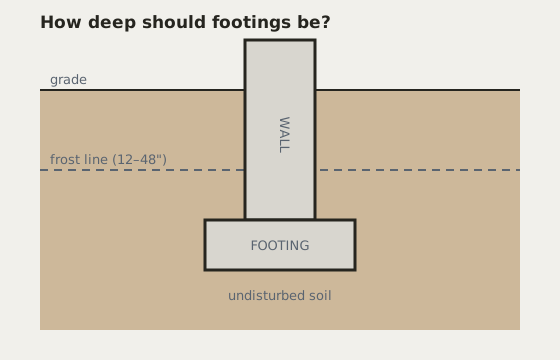
Below the frost line
Water in soil expands when it freezes, lifting anything above it. Footings must sit below the local frost depth so they're never in freezing soil. That ranges from about 12 inches in the warm South to 48 inches or more in the northern states. Your building department publishes the local figure, and it's not negotiable.
Into undisturbed soil
Footings need to bear on firm, undisturbed soil, not loose backfill or topsoil. A common minimum is 12 inches into virgin ground, deeper where frost or soft soils require it.
Width follows the load
Depth handles frost; width handles load. A typical residential strip footing is 16–24 inches wide and 8–12 inches thick, usually about twice the wall thickness. Wider footings spread heavier loads over soft soils. The footing calculator turns width, depth, and total run into the concrete to order.
Common questions
How deep should a footing be below the frost line?
The bottom of the footing should sit below your local frost depth entirely. Check your building department's figure for your area.
What is the minimum footing depth?
A common minimum is 12 inches into undisturbed soil, but frost depth and load can require much deeper.
How wide should a footing be?
Often 16–24 inches for residential walls, roughly twice the wall thickness, wider for heavy loads or soft soil.