Fresh concrete doesn't dry. It cures. Curing is a chemical reaction (hydration) between cement and water that keeps building strength for weeks, as long as moisture stays in the slab. That distinction is why “how long until it's dry” has a longer answer than most people expect.
The short version: light foot traffic may be possible after a day or two. Vehicle loading and strength depend on the mix, temperature and curing. Twenty-eight days is a common strength-test benchmark, not the moment all concrete stops gaining strength.
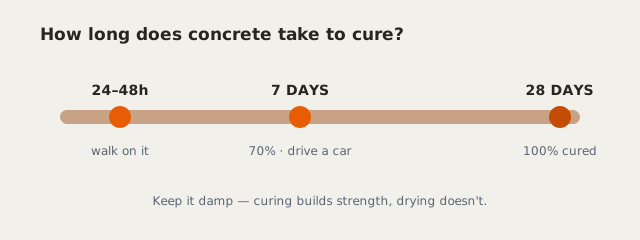
The concrete curing timeline
24–48 hours: forms can usually come off and you can walk on the slab carefully. The surface is set but still green, so keep heavy loads off it.
7 days: many conventional mixes have gained much of their specified strength, but there is no universal 70% rule. Follow the mix supplier's and contractor's loading guidance before driving on a new slab; keep the surface protected and moist as directed.
28 days: this is a common age for testing specified compressive strength. It does not mean hydration is finished or that every slab has reached exactly 100% of a fixed final strength.
Why keeping it wet matters
Hydration needs water. If a slab dries out too fast, from hot sun, wind, or low humidity, the reaction stalls and you get a weaker, more crack-prone surface. That's why crews mist slabs, cover them with plastic or wet burlap, or spray a curing compound for the first several days. Slower, wetter curing makes stronger concrete.
What changes the timeline
Temperature is the big lever: curing slows sharply below 50°F and can stall near freezing, while hot weather speeds the set but risks cracking. Mix design matters too because high-early-strength and accelerated mixes hit milestones faster. Thicker pours and high humidity both extend the schedule.
Common questions
How long before you can walk on concrete?
Usually 24 to 48 hours for foot traffic, though it depends on the mix and temperature. Stay off it entirely for the first day.
Is concrete cured in 24 hours?
No. It's set enough to walk on, but it's only a fraction of its final strength. Strength gain depends on the mix and curing conditions; 28 days is a common test age, not a universal end to curing.
Can it rain on concrete after pouring?
Light rain a few hours after finishing usually won't hurt a slab that has set; moisture actually helps curing. Heavy rain on a still-soft surface can wash out the finish.