For most residential work, use #3 (3/8 inch) or #4 (1/2 inch) rebar in a 12- to 18-inch grid. Patios and walkways can run #3 at 18 inches; driveways and garage slabs use #4 at 12 to 16 inches; footings typically use #4 or #5 bar. Rebar does not stop concrete from cracking; it holds the cracks tight and keeps the slab acting as one piece.
Bar sizes are numbered in eighths of an inch: a #3 bar is 3/8 inch, a #4 is 4/8 (1/2) inch, a #5 is 5/8 inch. Bigger number, thicker bar, more strength.
Rebar size by project
Patios, walkways, light slabs: #3 bar at 16 to 18 inches, or welded wire mesh. Driveways, garage and shop floors: #4 bar at 12 to 16 inches. Footings and foundation walls: #4 or #5 bar, count and spacing per the engineered plan. When a slab carries vehicles or structure, step up to #4 and tighten the grid.
Spacing and the grid
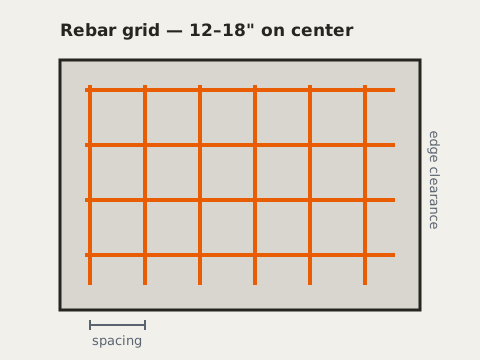
Lay rebar in a grid and tie the intersections with wire. Tighter spacing means more steel and a stronger, better-controlled slab; 12 inches is common for driveways, 18 inches for light-duty flatwork. Keep bars about 3 inches back from edges. The rebar calculator below turns your slab size and spacing into the number of bars and total linear feet.
Position and coverage
Rebar only works if it is in the right place. In a slab, keep the steel in the middle to lower third, up off the ground on chairs or dobies, not lying in the dirt. Maintain concrete cover of about 3 inches where concrete is cast against earth and 1.5 to 2 inches from formed faces, so the steel does not rust.
Lapping and tying
Where bars meet end to end, overlap them. A common rule is a lap of about 40 times the bar diameter (roughly 15 inches for #3, 20 inches for #4), and tie the lap. Tie wire holds the grid in place during the pour; it is not structural, so it does not need to be tight enough to bend the bars.
Common questions
What size rebar for a concrete slab?
#3 (3/8 inch) for patios and light slabs; #4 (1/2 inch) for driveways and garage floors. Footings usually use #4 or #5.
How far apart should rebar be?
Commonly 12 to 18 inches on center in a grid: 12 inches for driveways, 18 for light flatwork. Closer spacing adds strength.
Where in the slab should rebar sit?
In the middle to lower third, held up on chairs, never lying in the dirt, with about 3 inches of cover from earth so it doesn't rust.